

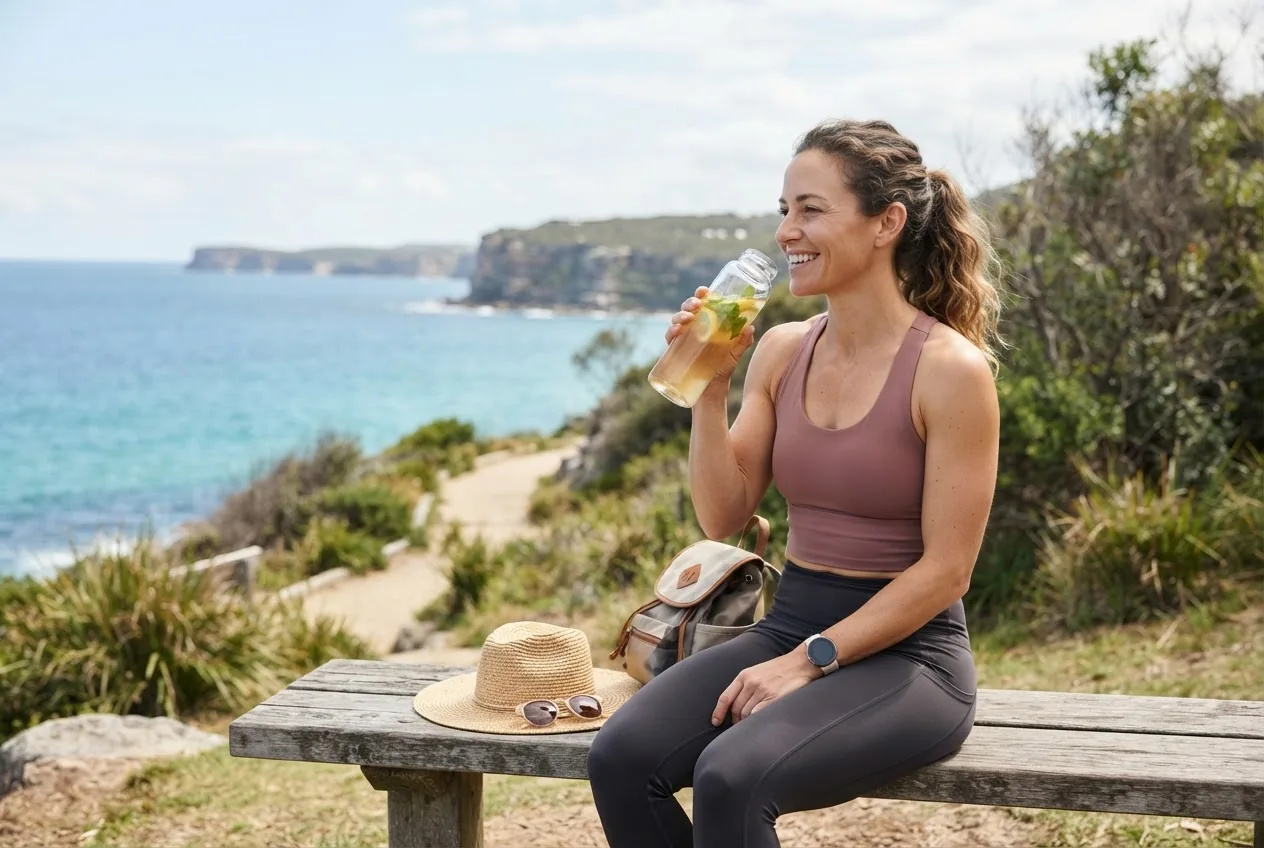

What you will achieve, time required and skill level
By the end of this guide you will have: a reliable homemade leisure electrolyte drink recipe (1 litre), clear rules for when and how much to drink during common Melbourne leisure activities, and practical storage and safety rules. Expect 10–15 minutes active prep time. Skill level: beginner — basic kitchen measuring and hygiene only.
Before you start
- Ingredients: plain drinking water (1 L), table salt, powdered sugar (or honey), fresh citrus or banana (optional), and optional potassium chloride (NuSalt) if you have it and know how to use it.
- Tools: digital kitchen scale (±1 g), measuring spoons, a 1 L bottle or jug, long spoon, funnel, clean tea towel, marker for labelling.
- Health checks: know if you have hypertension, kidney disease, or are on a low-sodium diet — check with your GP first.
- Target conditions: intended for light-to-moderate leisure exercise (walking, casual cycling, social sport) up to 90 minutes. Not a medical rehydration solution for severe dehydration.
Step-by-step: Make and use a leisure electrolyte drink
- Measure clean water — 1 litre: use filtered or mains water. If you plan to store the drink for more than 24 hours, boil water and cool it to room temperature before using. Pour exactly 1 L into a clean jug or bottle.
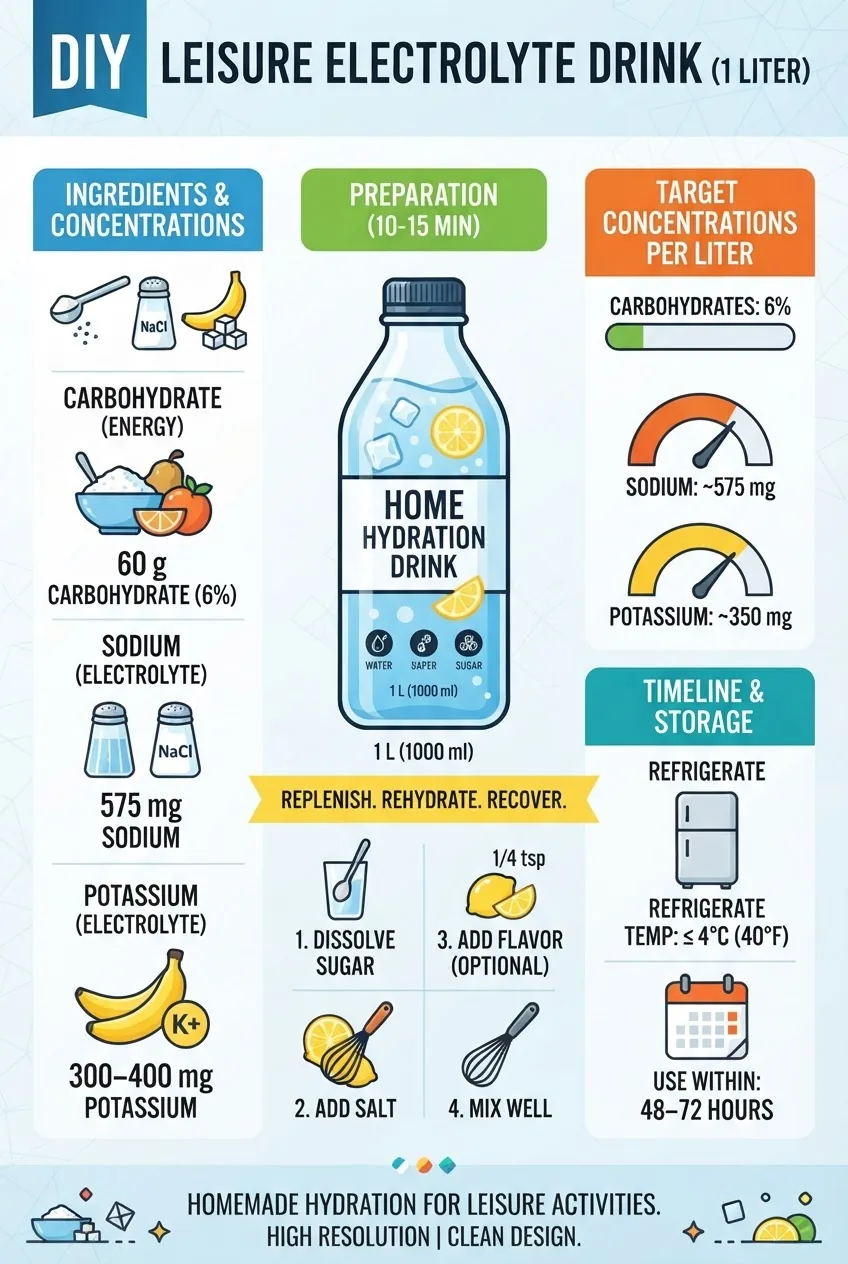
- Add carbohydrate — 60 g sugar (3 tbsp + 1 tsp / 5 tbsp = 60–62 g): dissolve 60 g granulated sugar in the 1 L water. This yields roughly a 6% carbohydrate solution (recommended range: 4–8% for leisure sports). If you prefer honey, weigh 50 g (one heaped tablespoon ≈ 20 g; use 2–3 tbsp to total ~50 g).
- Add sodium — 1/4 teaspoon table salt (≈1.5 g): stir in 1/4 tsp (≈1.5 g) of table salt. This supplies roughly 575 mg of sodium per litre (approximate). That level suits light-to-moderate activity in temperate conditions. If you sweat heavily or exercise >90 minutes, consider increasing to 1/2 tsp (≈3 g) — but check blood-pressure concerns first.
- Add a potassium source — 1 small banana or 60 ml orange juice: mash a small banana into the mix or stir in 60 ml fresh orange juice for potassium and taste. One medium banana provides ~400 mg potassium — useful for replacing losses from sweat during leisure activities.
- Optional: include potassium chloride powder (NuSalt) — 1/8 tsp (~500 mg K): only add if you regularly use NuSalt and have no contraindications. 1/8 tsp supplies roughly 350–500 mg potassium. Do not add >1/4 tsp per litre without medical advice.
- Mix and taste — stir for 30–60 seconds: use a long spoon and mix until all sugar and salt are fully dissolved. Taste test: it should be slightly sweet and mildly salty. If it tastes too salty, dilute with 100–200 ml water and re-label volume and sodium content.
- Cool and bottle — chill to ≤4°C within 2 hours: pour the drink into a clean 1 L bottle using a funnel if needed. Label the bottle with “Electrolyte Drink — made on YYYY-MM-DD” and refrigerate. Use within 48 hours; if you used boiled water and kept everything very clean, 72 hours in the fridge is acceptable. If left at room temperature, consume within 8 hours.
- Use during activity — 250–500 ml per hour for leisure exercise: for walking, social tennis, or casual cycling, sip 250–500 ml per hour depending on heat and sweat rate. For low-sweat activities (short social walks), 200–300 ml every 45–60 minutes is usually enough. For hotter Melbourne days, favour the higher end (500 ml/hr).
- Adjust for body weight and duration: heavier adults or those who sweat a lot can add an extra 100–200 ml/hr. Do not exceed 1.5 L per 2 hours during low-intensity leisure — monitor urine color (pale straw = OK) and watch for bloating or nausea.
-
Store and transport safely: keep bottles upright, chilled in an insulated bag with an ice pack. Discard any bottle that tastes off, looks cloudy, or is older than 72 hours refrigerated. Rinse and reuse bottles daily.
Why this recipe works for leisure activities
This formula targets light-to-moderate sweat losses without the higher sodium and caffeine found in performance sports drinks. The 6% carbohydrate level supports steady energy for 30–90 minute sessions; ~575 mg sodium per litre supports fluid retention and taste, which helps you drink enough. The banana or small addition of NuSalt supplies potassium to aid muscle function and prevent cramping during ordinary leisure exertion.
Common mistakes and how to avoid them
I once mixed by “eyeballing” salt and made a batch that was undrinkably salty. After that I always weigh or use measured spoons and taste-test — dilute immediately if it’s too salty.
I’ve also stored homemade bottles at room temperature after a long day; they went cloudy and tasted off. Now I always refrigerate within two hours and label with a made-on date.
I used too much NuSalt for someone with high blood pressure and caused dizziness. Check health conditions before adding potassium salts and consult a GP if you’re unsure.
Practical troubleshooting
- If the drink is too sweet, reduce sugar by 10–20 g next batch and test again; aim for palatable 4–8% carbs.
- If it tastes flat, add 10–20 ml fresh lemon or orange juice for flavor and a small vitamin C boost.
- If you get stomach upset, reduce intake to 100–200 ml every 15–20 minutes rather than larger gulps; overly concentrated carbs or cold temperature can cause cramps.
Checklist: verify your leisure electrolyte drink is correct
- Made 1 L total volume and labelled with date.
- Contains ~60 g sugar (or 50 g honey) and 1/4 tsp table salt (~1.5 g).
- Potassium included (banana or 60 ml juice) or documented omission for dietary reasons.
- Mixed until fully dissolved, chilled to ≤4°C within 2 hours, stored in clean bottle.
- Planned intake: 250–500 ml per hour for leisure activity; adjusted for heat and body size.
When to call a professional
Call a GP or seek urgent care if you or someone: shows confusion, fainting, collapsing, very low urine output (<2–3 times per day), persistent vomiting or diarrhoea, or has known heart/kidney disease and is considering regular electrolyte supplementation. For personalised sodium/potassium advice, ask your GP or an accredited sports dietitian in Melbourne.
Where this fits into your leisure routine
Use this leisure electrolyte drink for everyday leisure and social sport where comfort and sustained energy matter more than elite performance. For guided ideas about how leisure relates to wellness and activity choices, see the main guide to recreational activities: Recreational Activities Examples Guide for Leisure and Wellness. For low-impact activity plans that pair well with this drink, check the Physical Activity Definition and Exercise Guide and ideas for pacing from our Free Time Activities Guide.
Frequently Asked Questions
What is a leisure electrolyte drink and how does it differ from sports drinks?
A leisure electrolyte drink is a low-to-moderate carbohydrate beverage (about 4–8% carbs) with modest sodium (≈300–700 mg/L) and potassium sources intended for light-to-moderate leisure exercise. It differs from high-performance sports drinks in having lower sodium, lower sugar, and no added stimulants.
How long does a homemade leisure electrolyte drink last in the fridge?
Store refrigerated at ≤4°C and use within 48 hours for routine homemade batches. If prepared with boiled water and impeccable hygiene you can extend to 72 hours, but discard at any sign of cloudiness or off-odour.
Can I use this drink for intense or long endurance sessions?
Not ideal for intense endurance (>90–120 minutes). For prolonged or very sweaty sessions choose commercial formulations with higher sodium (500–1,100 mg/L) and known carbohydrate blends, or use dedicated electrolyte tablets designed for long events.
What do I do if the drink tastes too salty?
Dilute immediately with 100–200 ml plain water and taste again. If the saltiness persists, discard and remade with 1/8–1/4 tsp salt per litre. Always measure salt by spoon or weight to prevent repeats.
Is a leisure electrolyte drink safe for people with high blood pressure?
If you have hypertension, consult your GP before using sodium-containing electrolyte drinks regularly. You can still hydrate with plain water and increase potassium via fruit under medical guidance, but sodium additions can affect blood pressure.