


What you’ll achieve, how long it takes, and who this is for
By the end of this step-by-step guide you will have selected 2–4 household hobbies, set up a safe workspace, sourced the essential supplies (listed by item and quantity), scheduled regular 60–90 minute sessions, and created a 4-week practice plan with measurable goals. Realistic completion time: one focused afternoon (3–4 hours) to get started, plus ongoing 1–2 hour weekly practice. Skill level assumed: complete beginner to intermediate — no previous experience required.
Before you start
- Physical prerequisites: a clear 1.2 m x 0.6 m surface (table) and 2 m² floor space for larger activities.
- Basic tools: tape measure, utility knife, set of screwdrivers, power outlet access, LED task lamp (≥800 lumens).
- Materials (example bundle for 2 hobbies): 1 small sewing kit (scissors, needles, 50 m thread), 1 starter paint set (6 acrylics, 2 brushes), 20 A4 sheets, storage box 30×20×15 cm.
- Time: book two 90-minute blocks in the next 7 days to build momentum.
- Attitude: willingness to repeat a task 3–5 times before judging progress.
Step-by-step training (core steps)
- Choose your first 2–4 house hobbies — Pick one hands-on and one low-effort hobby so you have variety. Example pairs: (sewing basics + journaling), (container gardening + simple woodworking), (acrylic painting + puzzle solving). Limit your initial list to 2–4 items so you can practice consistently rather than spreading effort too thin.
- Set clear goals with measurable outcomes — For each hobby write one SMART goal: specific, measurable, achievable, relevant, time-bound. Examples: “Sew a simple cushion cover (50×50 cm) within 4 weeks” or “Grow 3 herb pots to harvest within 8 weeks.” Record these goals on a single A4 sheet pinned near your workspace.
-
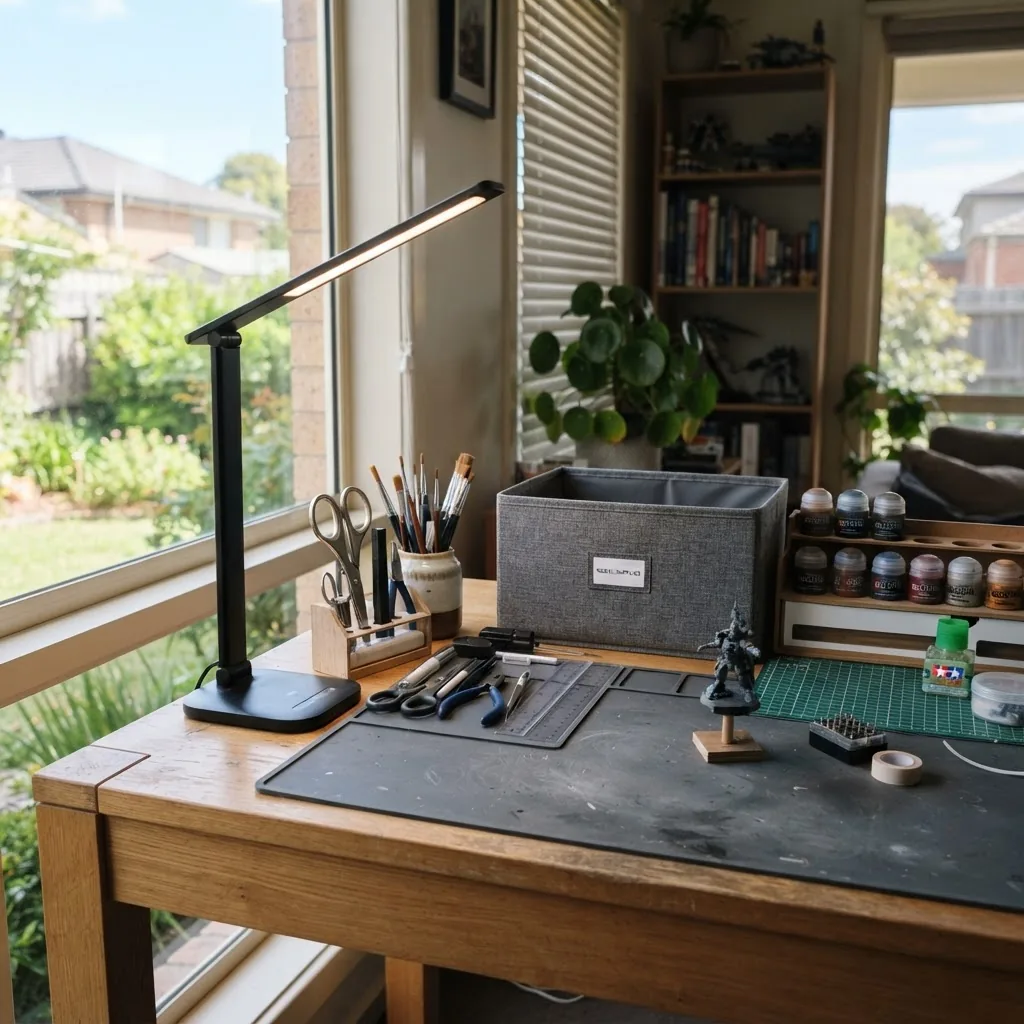
Assess and prepare your workspace — Clear a 1.2 m x 0.6 m table, ensure 800–1,200 lux task lighting (LED lamp with ≥800 lumens at 30 cm), and position a power strip with surge protection. Place a 30×20×15 cm storage box for small tools and label it. If working with paints or soil, lay a 1.2 m x 0.6 m washable mat or vinyl sheet.
-
Gather essential supplies and quantities — Use a checklist per hobby. Examples (buy these exact quantities to start):
- Sewing: 1 basic sewing kit, 0.5 m of medium-weight cotton, 1 basic zipper, 6 straight pins.
- Painting: 6-tube acrylic set (12 ml each), 2 brushes (size 4 and 10), 5 canvas boards 20×25 cm.
- Container gardening: 3x 20 cm pots, 5 kg potting mix, 10 basil seeds, hand trowel.
Use local suppliers in Melbourne or general-purpose online retailers; keep receipts and note delivery times (expect 2–7 days).
-
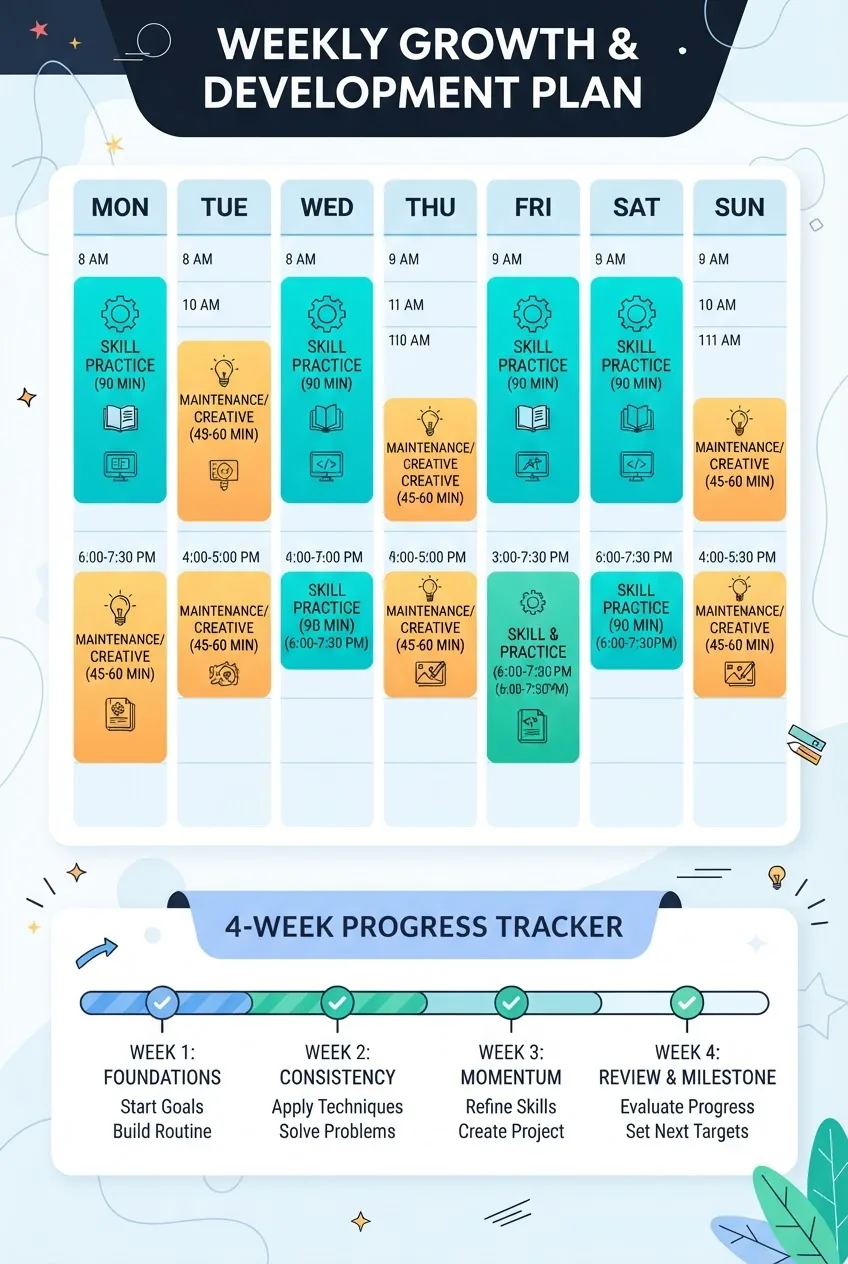
Make a realistic weekly schedule — Block two weekly sessions: one 90-minute deep-practice session and one 45–60 minute maintenance/creative session. Example: Saturday 9:00–10:30 practice; Wednesday 19:00–20:00 light session. Use your phone calendar with reminders 24 and 1 hour before each session.
-
Learn the basic technique first — 3 focused drills — For new manual hobbies spend the first three sessions on technique drills (not projects). Example drills:
- Session 1 (60–90 min): repetition drill — repeat a basic stroke or stitch for 30 minutes, then review 5 minutes.
- Session 2 (60 min): control drill — practice holding tools and maintaining consistent pressure or tension for 30 minutes.
- Session 3 (60 min): accuracy drill — make 5 short, complete small pieces (e.g., 5 fabric squares, 5 small sketches) with 10-minute timed runs.
Record session outcomes: time spent, error count, one improvement note.
-
Start a small, complete project — Choose a project that takes 3–5 sessions. Examples and exact scopes:
- Sewing: single cushion cover (50×50 cm), requires 0.5 m fabric, zipper or Velcro, 3 seams — estimate 3 sessions.
- Painting: single 20×25 cm canvas, 2–3 colour layers, varnish — estimate 3 sessions (sketch, block-in colour, refine/detail).
- Container gardening: pot herbs in 3 pots, label each pot; expect 2 sessions over 2 weeks for watering and trimming.
Finish one full project before starting another to build confidence.
- Track progress with simple metrics — Use a one-page tracker: date, activity, minutes practiced, specific measurable outcome (stitch tension, brush stroke count, plant height cm). Targets: improve a measured metric by 10–20% every two weeks (for example, reduce stitch unevenness from 6 errors/20 stitches to ≤5).
- Rotate and scale thoughtfully — After 4 weeks review per-hobby metrics. Keep up to two core hobbies and one rotational hobby. Scale parameters: increase practice session length by +15 minutes every 2 weeks until 120 minutes, or add one intermediate project every 6–8 weeks.
- Include other household members — Invite one family member or flatmate to a 45-minute “taster” session once in the first month. Supplies: duplicate one essential tool (scissors, brush) and schedule a 15-minute debrief after. This builds social accountability and divides cleanup tasks.
- Safety, cleanup and storage routines — After every session: 10 minutes to clean brushes/tools, 5 minutes to store consumables in labelled boxes, and 2 minutes to wipe surfaces. If using paints, ventilate the room for 20 minutes after finishing. For gardening, wash hands for 30 seconds and store soil sacks closed in a dry area.
Common mistakes and how to avoid them
I often saw people buy a long list of tools and then never use them — so I now tell students to start with only the exact quantities named above. I once skipped the 3-drill technique approach and moved straight to a big project; the result took three times longer and required rework. I’ve also watched beginners practice inconsistently: they expect 10–15 minute sessions to yield major improvement. The fix is scheduled, repeated blocks (90 and 45–60 minutes) and keeping the first 3 sessions purely drills.
Quick checklist — verify your work
- Workspace cleared to 1.2 m × 0.6 m and task lamp ≥800 lumens in place.
- Essential supplies bought in the exact quantities listed for chosen hobbies.
- Two weekly time-blocks scheduled (90 minutes + 45–60 minutes) with phone reminders.
- One small, complete project started and tracked across 3–5 sessions.
- Progress tracker shows at least one measurable improvement (≥10%) after 4 weeks.
- Safety/cleanup routine completed at the end of each session.
When to call a professional
Call a professional if: electrical work is required for a dedicated hobby circuit; you need specialist carpentry beyond basic handheld tools; a project involves toxic materials (strong solvents, resins) beyond household-grade paints; or you have mobility or health issues that make repetitive hand work unsafe. For safety-critical or structural tasks, expect professional quotes in Melbourne to start from AUD 120–150 per hour for tradespeople.
Further reading and related guides
For broader ideas on recreational activities and structuring leisure time, see our pillar page on recreational activities examples. If you want project inspiration, try the creative hobbies guide, or browse options tailored for older adults in our hobbies for seniors guide.
Frequently Asked Questions
What are simple house hobbies I can start with no experience?
Begin with low-equipment hobbies: journaling, 20×25 cm acrylic painting, container herb gardening (3 pots), or jigsaw puzzles. Each requires under AUD 50 in basic supplies and two scheduled sessions per week to make steady progress within one month.
How much time should I practice house hobbies each week to see progress?
Schedule one 90-minute focused practice session plus one 45–60 minute maintenance or creative session per week. That 2.25–2.5 hour total yields measurable improvements within four weeks when combined with targeted drills and tracking.
What should a beginner buy first: tools or materials?
Buy essential tools and minimal consumables only. Example starter bundle: sewing kit + 0.5 m fabric, or 6-tube acrylic set + 5 canvas boards. Avoid buying large tool collections until you complete a small project and confirm continued interest.
How do I keep house hobbies organised in a small Melbourne apartment?
Use a 30×20×15 cm labelled storage box per hobby, clear a 1.2 m × 0.6 m workspace, and adopt a 10-minute cleanup at session end. Stackable storage and vertical shelving save 0.5–1 m² of floor space while keeping items accessible.
What problems should prompt me to seek professional help?
If a project requires electrical rewiring, structural changes, toxic chemical handling, or you experience repetitive strain pain, stop and consult a licensed tradesperson or medical professional. Trades typically charge from AUD 120–150 per hour in Melbourne.