



What you’ll achieve, time required and skill level
By the end of this guide you will have a practical, measurable plan to establish or improve your credit history in Australia: how to open the right accounts, the exact behaviours to change, a 12-month timeline with checkpoints, and scripts/examples for disputes and applications. Expect to spend 2–6 hours setting up the plan, then 30–60 minutes per month maintaining it. This guide assumes a basic comfort with online banking, reading statements and using email — no advanced finance background required.
Before you start
- Identification: Australian driver licence or passport and your current residential address (required for most credit checks and applications).
- Bank login access: internet banking for your primary account to set direct debits and view statements.
- 3 months of recent bank statements saved as PDF (download from your bank).
- An email address you check daily and a mobile phone for 2FA and alerts.
- Tools: a spreadsheet or note app (create a one-page tracker), and a secure password manager for logins.
- Time: 2–6 hours initially; then 30–60 minutes monthly.
How to build credit — step-by-step numbered plan
Follow the steps below in order. Most readers will repeat parts of this plan (dispute/reporting, diversification) over 6–18 months for best results.
-
Check your credit reports and scores from all three bureaus.
Action: Obtain your free credit report from Equifax, Experian and Illion (once per 12 months each in Australia you can get free reports; some providers charge for score). Download the full report (PDF) and save copies.
Why: Errors — wrong addresses, closed accounts reported as open, duplicate debts — are common and can drag your score down by 20–120 points depending on severity.
How: Use the bureau websites and follow their identity verification steps. If a bureau requires a small fee for score-only access, use the free credit report option first. Record the report date and a 6-item summary in your spreadsheet: total accounts, accounts with late payments, defaults, enquiries in last 2 years, current credit limit, and any collections/defaults.
-
Record and prioritize real issues: disputes, defaults and enquiries.
Action: From the reports, list every negative item. Prioritise: defaults and judgement listings first, then registered late payments older than 6 months, then inaccurate personal details. For each item, write the remedy and expected time to resolve: dispute (14–45 days), negotiate removal (30–90 days), request a hardship arrangement (immediate to 3 months).
Example: If a mobile plan shows a default from 2019 for $420 that you paid in 2020 — note: “Dispute: provide receipt; expected 30–45 days for correction”.
How to manage disputes: lodge disputes online with each bureau and the creditor. Keep copies of all communications. Use registered mail when sending physical documents and note the timestamp for follow-up at 14 and 30 days.
-
Set an immediate payment discipline: automatic on-time payments.
Action: Wherever possible, set direct debits so each recurring credit payment posts at least 3 business days before the statement due date. For variable bills, schedule automated transfers: for example, transfer $200 every Thursday to your credit card clearing account if your weekly budget supports it.
Why: Payment history is the largest single factor. One late payment reported is often -30 to -60 points. Consistent on-time payments over 6–12 months yield measurable score gains.
How: Identify due dates, count back 3 business days, and set the direct debit or scheduled payment. Confirm your bank processes the debit by checking the first two payments and logging the confirmation number in your tracker.
-
Lower credit utilisation immediately to below 30% — target 10% for fastest gains.
Action: Calculate utilisation per card: current balance / credit limit × 100. If any card is above 30%, pay down to 10% within 7 days. Example: A $2,500 limit with a $900 balance = 36%; pay $650 to get to 10% ($250 balance).
Why: Amounts owed is the second-largest factor. Reducing utilisation from 80% to 30% commonly raises a score by 20–70 points; from 30% to 10% can add another 10–40 points.
How: Use a balance transfer (if fees under 2% and you can clear within the rate-free period) or an immediate repayment from savings. After payment, confirm the next statement shows the reduced balance; reporting happens when the creditor reports to the bureau — usually the statement date (every 28–31 days).
-
Open a starter credit product if you have thin or no credit file.
Action: Choose between a secured credit card, a low-limit standard credit card, or a credit-builder loan. Target starting credit limits of $500–$2,000. If you have no credit history, prefer secured cards or credit-builder loans; for those with weak history, a $500–$1,000 card is safer.
Why: One active account reporting positive payments builds history. Secured credit cards require a cash deposit (usually equal to the limit). Credit-builder loans put borrowed funds in a locked savings account and report repayments to the bureaus.
Example: Apply for a secured card with $500 deposit, charge $50 per month, pay in full weekly. After 6 monthly on-time payments the account shows a perfect payment record.

-
Use “rent reporting” and utility reporting to create payment history.
Action: Enrol in a rent-reporting service (cost typically $10–$30/month) that reports on-time rent payments to credit bureaux, or ask your landlord/property manager to use a service that does. For utilities, switch to providers that report positive payment history or use a third-party service that reports telecom and utilities.
Why: For renters, this can add 12 monthly on-time payments to your file within a year, which is powerful if you lack formal credit accounts.
How: Choose a provider with explicit reporting to Equifax/Experian/Illion and confirm reporting frequency (monthly). Keep copies of rent receipts and the service’s confirmation email. Expect reporting to start within 1–2 billing cycles after enrolment.
-
Become an authorised user or joint account holder cautiously.
Action: If a family member with a long, excellent credit history will add you as an authorised user on a credit card, request the issuer confirm their reporting policy: does the issuer report authorised users to all three bureaus? If yes, ask for addition with a low balance and ensure the primary holder maintains utilisation below 10% and zero late payments for 12 months.
Why: Being added can instantly lengthen your history and add positive payments, but it can also inherit negatives if the primary holder mismanages the account.
How: Only accept this if the primary holder has 3+ years of clean history on that account and their typical utilisation is below 20%. Alternatively, a joint small loan (with clear agreement) creates shared responsibility and reporting.
-
Plan new credit applications to limit hard enquiries to fewer than two per 12 months.
Action: Use soft-credit checks first to gauge eligibility; only complete hard applications when pre-qualified or confident. When shopping for a specific loan (e.g. car loan), concentrate applications in a 14–45 day period — many scoring models count multiple enquiries in a short window as one.
Why: Hard enquiries lower your score by roughly 5–10 points each; several in a short time can compound. Limiting hard pulls prevents unnecessary damage.
How: Use bank pre-approval tools and comparison sites that say “no-hard-inquiry” for pre-qualification. Keep a log in your tracker: date of soft check, lender name, result, and whether you proceeded to a hard pull.
-
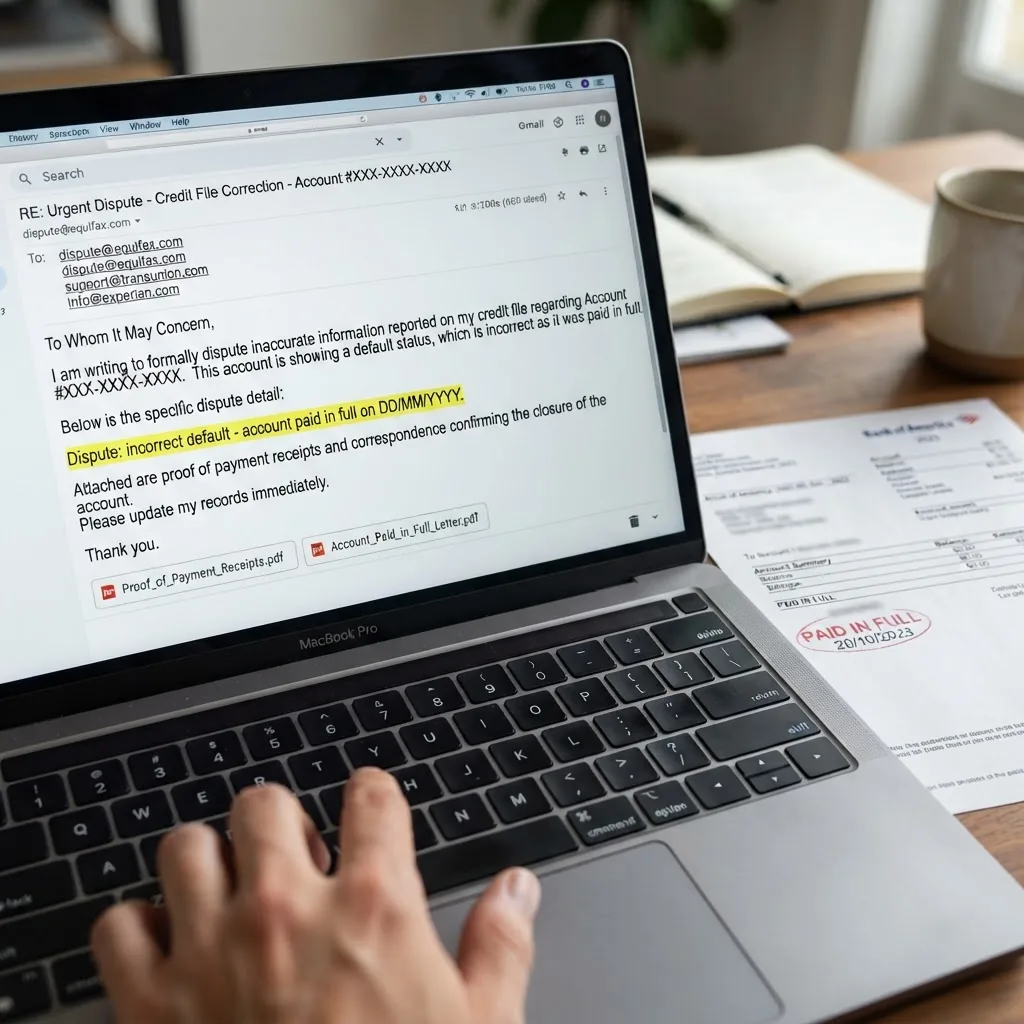
Dispute inaccuracies aggressively and document everything.
Action: For every error identified, attach documented evidence (receipts, correspondence) and lodge disputes with both the creditor and the relevant bureau. In your tracker set reminder to follow up at 14 and 30 days. If the bureau does not resolve, escalate to the Australian Financial Complaints Authority (AFCA).
Worked example: An unauthorised default for $1,200—supply your cleared-payment receipt with the dispute and request deletion. Expect a change within 30–45 days; if not, lodge a complaint with AFCA and note the complaint number.
Why: Accurate files are foundation. I have seen mid-range borrowers gain 50–150 points after clearing a single erroneous default.
-
Mix types of credit carefully: at least one revolving and one instalment account over 12–24 months.
Action: Aim to have at least one credit card (revolving) with a >12-month history and one instalment loan (personal loan, car loan or credit-builder loan). Do not open multiple accounts at once; space new accounts at least 6–12 months apart once you have a baseline history.
Why: Credit mix counts for around 10% of score models. Having both account types and paying them on time shows you can manage different repayment structures.
How: If you already have a card but no loan, consider a small personal loan of $1,000–$5,000 that you can repay over 6–24 months and that reports to bureaus. Confirm reporting frequency and whether the lender reports to all three main bureaux.
-
Keep oldest accounts open and reduce closing of cards to maintain length of history.
Action: Do not close long-standing credit cards even if unused. Instead, make a small purchase (e.g. $5 monthly subscription) and pay it off immediately to keep the account active. If you must close, close the newest accounts first.
Why: Average account age matters. Closing a 10-year card can significantly drop your average age and lower the score. Every year of aging an account increases “length of history” benefit in most models.
How: Set a $5 automated monthly purchase on a card you plan to keep, with payment in full within 24 hours so there is no interest. Monitor the card’s reporting: some issuers report accounts as closed if no activity occurs for 12–18 months.
-
Monitor progress monthly and measure by specific metrics.
Action: On the first of each month, update your tracker with: current credit score(s), total balances, utilisation per card, new enquiries, any status changes. Compare month-to-month and record the primary cause of any change (e.g. +1 late payment, -$800 balance).
Targets: within 3 months reduce utilisation to <30% and have zero new late payments; within 6 months see payment history with at least 3 on-time payments on new accounts; within 12 months achieve utilisation ~10% and an improved score by 30–150 points depending on starting point.
How to track: Use a single spreadsheet with columns: date, bureau, score, total accounts, negative items, enquiries last 12 months, highest utilisation, next planned action.
-
Plan for repairs: targeted actions for defaults and collections.
Action: For each default or collection, identify three options: pay in full for deletion/settlement, negotiate a payment plan with removal upon completion, or apply for a hardship arrangement and request notation. Prioritise accounts with the largest balances and those with recent late payments (<24 months).
Example negotiation script: \”I can pay $350 today as full and final settlement for the outstanding $1,200 if you agree to remove the default and notify the credit bureaux in writing within 10 business days.\” Get any agreement in writing.
Why: Defaults remain visible for up to 5 years in Australia; removing or settling them can materially improve creditworthiness for future lenders, even if the score does not immediately reflect the change.
-
Set long-term maintenance rules and guardrails.
Action: Create documented rules you follow: never carry a card balance >10% for more than one statement cycle, pay all bills within 3 days of invoice, limit hard credit applications to 2 per 24 months, and review bureau reports quarterly. Store these in your password manager as a checklist.
Why: Discipline prevents regression. Once you reach a good score, small lapses (a single 30-day late payment) can undo months of progress. Rules give you consistent, repeatable behaviour.
How: Configure calendar reminders for monthly checks and emergency access to $500 in savings for card payments to avoid a late notice during cash-flow tight months.
Worked examples and timelines
Example A — Thin file to 650+ in 12 months
Starting point: no credit history. Month 0 actions: get one secured credit card with $500 deposit; enrol rent-reporting; set monthly payment automation. Months 1–3: make weekly payments totaling $50–$150 a month, keep utilisation ≤10%. Months 4–6: add a $1,500 personal credit-builder loan with 12-month term and repay $125/month. Months 7–12: continue on-time payments, keep utilisation ≤10%, avoid hard inquiries. Expected result: by month 12 the file shows 12 on-time payments across card and loan, rent reporting, and a credit score typically in the 650+ range for Australian scoring models.
Example B — Repair after a recent 60-day late and high utilisation
Starting point: score ~550, one 60-day late from 2 months ago, and 90% utilisation across two cards. Immediate actions (weeks 0–2): pay down balances to ≤20% (transfer $2,000 from savings), set direct debits for all cards, dispute any statement errors. Months 1–3: maintain on-time payments, do not apply for new credit, resolve any outstanding default negotiations. Months 4–12: build positive payments; expect score gains of 40–120 points depending on age of late payment and reduction in utilisation.
Tools, products and exact settings I recommend
Below are the specific product types and numeric settings that consistently work in practice.
| Product type | Typical cost | Recommended settings/notes |
|---|---|---|
| Secured credit card | $0–$100 account fee; deposit equal to limit | Deposit $500–$1,000; use 5% monthly, pay in full weekly; report to bureaux |
| Credit-builder loan | $0–$50 admin fee | Loan $1,000–$3,000; 6–12 month term; repayments auto-debit monthly |
| Rent-reporting service | $10–$30/month | Confirm reporting to all three bureaux; start early |
| Balance transfer offer | 0% for 6–24 months, transfer fee usually 1–3% | Use only if you can clear within promo; fee <2% preferred |
How long each action actually takes
Be realistic: quick wins (reduce utilisation, set up direct debits) take 1–7 days. Establishing new accounts takes 7–14 days from application to first report. Bureaux typically update monthly, on or near the statement date. Disputes can resolve in 14–45 days; complex AFCA escalations take 4–12 weeks. Expect visible score movement within 1–3 months for small changes (utilisation), and 6–12 months for history-based changes (new accounts reporting, cleared defaults).
Common mistakes and how to avoid them
I’ve seen these mistakes repeatedly in practice. Below I describe what went wrong and the exact steps I use to prevent them.
- I waited to check my credit report. I once advised a client who assumed their file was clean; three months later we found a default and an identity mix-up. I now always recommend checking all three bureaus before taking action. If you delay, you may apply for credit unaware of negatives that will cause rejections and additional hard enquiries.
- I closed an old card to “simplify” finances. I personally closed a 12-year-old card and saw my average age drop; it cost me 15 points. Instead, use a small recurring purchase to keep it active and avoid closure unless there’s an annual fee over $50 and you have younger cards aged 3+ years to offset the change.
- I let utilisation spike during a single cycle. I once allowed a client’s card to show 92% utilisation due to a large purchase; the score dropped and recovery took months. To avoid this, plan large purchases around the billing cycle and pay down before the statement date so the reported balance stays below 30% (aim 10%).
- I applied for multiple cards in a short period. I saw someone apply to five lenders in 30 days after a pre-qualification rejection, which caused multiple hard enquiries and a persistent score drop. Use soft checks first and limit hard applications to two in 12 months, concentrating shopping windows into 14–45 days when possible.
- I trusted a landlord service without confirming bureau reporting. I recommended a rent-reporting service that only reported to one bureau; the client expected coverage across all. Always confirm which bureaux the service reports to (Equifax, Experian, Illion) and get it in writing before paying monthly fees.
- I accepted an authorised user addition without discussing habits. I once accepted being added to a relative’s card without checking their payment record; a later missed payment affected my file. Don’t accept authorised user status unless the primary account has 3+ years of perfect behaviour and utilisation below 20%.
Compact checklist — verify your work
- All three credit reports downloaded and saved (Equifax, Experian, Illion).
- Negative items listed with action and deadlines in your tracker.
- Direct debits set at least 3 business days before each due date.
- All card utilisations reduced to ≤30%; target ≤10% for best results.
- At least one account is actively reporting positive payments (card, loan or rent).
- No more than two hard credit applications in the last 12 months.
- Oldest accounts kept open and small recurring charge scheduled where needed.
- Disputes lodged for any inaccurate items with follow-ups at 14 and 30 days.
- Monthly tracker entry scheduled and maintained (first of each month).
When to call in a professional
Call a specialist if any of the following apply: you have a default over $2,000 or multiple defaults, a court judgement, suspected identity theft, or AFCA-level disputes that have stalled after 45 days. A qualified credit consultant or financial counsellor can negotiate settlements, draft dispute letters, and escalate to AFCA. If you face potential bankruptcy, insolvency, or legal action, contact a lawyer specialising in consumer credit immediately.
Additional tips specific to Melbourne and Australia
Local considerations matter. In Melbourne you can often access in-person free financial counselling through community legal centres and state-run services — particularly useful for disputing complex debts or defaults. Check council websites or call 1800 numbers listed by state governments for no-cost support. Also, many Melbourne-based lenders have branch staff who can mark accounts with hardship notations quickly in person; this can prevent a single missed payment from becoming a formal default.
How building credit interacts with major life goals
Buying a home: Lenders usually require at least 6–12 months of clean credit history and stable income. For a home loan application, ensure: last 6 months of payments are on-time, utilisation is below 10% on revolving accounts, and total new enquiries in last 12 months are ≤2.
Renting or leasing cars: Landlords increasingly check credit. Enrolling in rent-reporting programs and maintaining a positive credit record for at least 6 months improves your rental prospects. For car leasing, expect checks on recent loan defaults and payment history over the last 24 months.
Resources and further reading
To broaden your knowledge read our in-depth guides on score mechanics and repair strategies: Personal Finance Tips and Money Management Advice Guide, How to Fix Credit Score Guide with Repair and Improvement Tips, and What Affects Your Credit Score Guide. These sibling articles show scoring ranges, deeper repair case studies and budgeting templates to support the actions in this article.
Practical scripts and templates
Below are short, copy-paste-ready messages for common situations. Save these into your email drafts.
Dispute to credit bureau
Subject: Dispute of inaccurate listing – [Your name] – [DOB]
Body (copy): I am disputing an item on my credit file: Creditor: [Name], Account ref: [number], Listed as default from [date]. I have enclosed proof of payment (receipt dated [DD/MM/YYYY]). Please investigate and remove or correct this entry as soon as possible. I expect a response within 30 days. Regards, [Your name]
Settlement offer to creditor
Body (copy): Re: Account [number]. I can offer $[amount] today as full and final settlement for the outstanding balance of $[original]. If you accept, please confirm in writing that you will remove any default, close the account as settled, and notify the credit bureaux within 10 business days. Payment will be made upon receipt of written agreement.
Request for authorised user confirmation
Body (copy): Please confirm the issuer’s policy on reporting authorised users to credit bureaux. Does the account report authorised users to Equifax, Experian and Illion? If yes, please add [Your name] (DOB [DD/MM/YYYY]) as an authorised user on account [number].
Long-term mindset — what to expect in years 2–5
After the first 12 months of disciplined behaviour you should expect steady improvements but not infinite speed. Payment history gains accumulate: two years of perfect payments is materially stronger than six months. Negative items older than 24 months have less weight, and after five years most historical negatives have reduced impact or fall off. Aim for a rolling 36-month window of on-time payments and low utilisation as the basis for reaching “good” or “very good” credit categories in Australian scoring models.
Cost-benefit and ROI of the actions
Investments you might make and typical benefits:
- $10–$30/month rent-reporting: can be worth 30–100+ points if you have thin credit and get 12 months of reporting.
- $50–$100 deposit for secured card: builds history quickly; return is improved eligibility for standard cards and better rates.
- $100–$500 in dispute/document retrieval costs: often removes incorrect defaults saving thousands in future interest by qualifying you for lower mortgage rates.
In short, small upfront costs and disciplined monthly savings have outsized long-term returns through lower interest rates and better loan terms.
Frequently Asked Questions
How long does it take to build credit from scratch?
From scratch you can create a reportable credit history within 1–2 months (after opening a secured card or credit-builder loan), but meaningful score improvements usually appear after 6–12 months of on-time payments and consistent low utilisation.
What is the best way to build credit quickly?
The fastest legal method: open a secured or low-limit credit card, keep utilisation at 10% or less, and make weekly on-time payments. Add rent-reporting and a credit-builder loan; expect measurable gains in 3 months and stronger gains after 6–12 months.
Can I build credit without a credit card?
Yes. Use a credit-builder loan and rent-reporting services, and ensure utilities/phone accounts that report on-time payments are in your name. These actions create payment history without revolving credit.
How can I fix my credit quickly after a late payment?
Pay the overdue amount immediately, negotiate for a goodwill adjustment if it’s a single late payment, and maintain perfect payments thereafter. Reducing utilisation to under 30% helps; expect score recovery over 1–6 months depending on other file items.
How many hard enquiries will hurt my credit?
Each hard enquiry typically reduces your score by about 5–10 points. Limit hard enquiries to fewer than two in a 12-month period where possible; group loan applications into a 14–45 day window to minimise impact.
When should I contact a professional to repair credit?
Contact a professional if you have court judgements, defaults over $2,000, multiple unresolved disputes, or suspected identity theft. A financial counsellor or credit lawyer can escalate disputes and negotiate settlements effectively.
For deeper reading on how scores are calculated and to explore repair case studies, see What Affects Your Credit Score and our credit repair guide. If you want a step-by-step money management approach that integrates with credit building, our personal finance guide includes templates and trackers used in practice.