



What you’ll have achieved, time required and assumed skill level
By the end of this guide you will have opened the right investment account, learned how to place cash and market orders, built a first diversified stock-and-ETF portfolio, implemented simple risk controls (stop-loss and position sizing), and set a quarterly review and rebalancing routine. Realistic time to complete the setup and initial purchases: two to four hours for most readers; ongoing management: 30–60 minutes monthly. Skill level assumed: complete beginner who can use online banking and upload ID documents; no prior investing experience required.
Before you start
- Tax file number (TFN) or equivalent ID for Australian residents; passport or driver’s licence for ID verification.
- An amount to invest: start with at least AUD 500 for low-cost ETFs, AUD 2,000 if buying multiple individual shares to avoid excessive commission impact.
- Bank account details for linking to a broker (BSB and account number) and 1–2 business days for initial transfer.
- A desktop or laptop for the first setup (mobile apps are fine afterwards).
- Personal email and mobile phone for two-factor authentication (2FA).
- Note-taking tool (paper or digital) to record ticker symbols, purchase price, date and brokerage fees.
- Broker comparison checklist printed or in a browser tab (fees, platform, CHESS sponsorship, research tools).
Core process — step-by-step
-
Decide which account type you need:
Choose between a standard taxable brokerage account, a tax-advantaged account (for example, a self-managed super fund if you have the expertise and meet rules) or a managed investment account. For most beginners in Melbourne I recommend a standard brokerage account. Timeline: research and decision — 30–45 minutes.
Concrete thresholds: If you plan to hold for long-term growth and invest under AUD 20,000 per year, use a taxable brokerage account. If you receive employer super contributions and want concessional tax treatment, investigate SMSF only if you will keep at least AUD 200,000 and commit 8–12 hours per year to admin or hire an accountant.
-
Choose a broker and compare fees:
Compare 3–5 brokers and pick one with these minimum features: brokerage per trade under AUD 20 for online trades, no inactivity fee under AUD 25/month, CHESS sponsorship option if you want share registration, and a mobile app with 2FA. Example brokers to evaluate: broker A with AUD 9.95 per trade (low-cost fixed), broker B with 0.1% per trade (variable), broker C with AUD 19.95 and free ETFs buys.
Make a decision matrix with columns: brokerage per trade, account fee, settlement time (T+2 for ASX), CHESS registration (yes/no), margin lending availability, and research tools. Score each broker 1–5 and pick the highest scorer. Save screenshots of the fee schedule once you’ve decided.
Typical fees to expect in Australia: online brokerage AUD 5–25 per trade, platform or account fee AUD 0–10/month, ETF buy fee sometimes zero for specific ETFs. If your broker charges foreign exchange conversion for overseas stocks, expect 0.5%–0.7% FX margin plus per-trade fee.
-
Open and verify your brokerage account:
Open online using your tax file number, local address, ID (passport or driver’s licence) and bank details. Upload scans or clear photos of ID. Expect verification to complete within 24–48 hours if documents are clear; sometimes instant with automated checks.
Set up two-factor authentication (SMS + authenticator app) during onboarding. Choose a strong password (unique, 12+ characters with letters, numbers, symbols). Record your brokerage account number in your password manager or physical notebook.
-
Fund your account with an initial amount:
Transfer an initial deposit that matches your plan: minimum AUD 500 for slow-start ETF only plan; AUD 2,000–5,000 if you intend to buy 3–6 individual stocks to keep per-trade cost under 1% of trade value. Use a bank transfer and tag it with the reference your broker requires. Expect settlement (available cash) in 1–2 business days.
Concrete example: to buy 4 ASX stocks at AUD 1,000 each and pay AUD 10 brokerage per trade, funding AUD 4,040 covers purchase and fees (4 × 1,000 + 4 × 10).
-
Decide your investment strategy and time horizon:
Pick one of three clear paths — buy-and-hold dividend-growth, index-ETF core-and-satellite, or active individual-stock trading. For beginners I recommend “ETF core + 2–3 satellite stocks” with a time horizon of at least 5 years.
Concrete allocations to start: Core ETFs 60–80% of portfolio, Satellite individual stocks 20–40%. If you only have AUD 1,000, start with a single broad-market ETF (e.g., 100% to an ASX 200 ETF or a global total market ETF) to avoid commission drag.
-
Set clear risk rules and position sizing:
Set position size limits: maximum 5% of portfolio in any single stock and maximum 25% in a single sector. If your portfolio is AUD 10,000, no single stock should exceed AUD 500 at purchase. Set a maximum portfolio concentration: 30% maximum in speculative or high-volatility names.
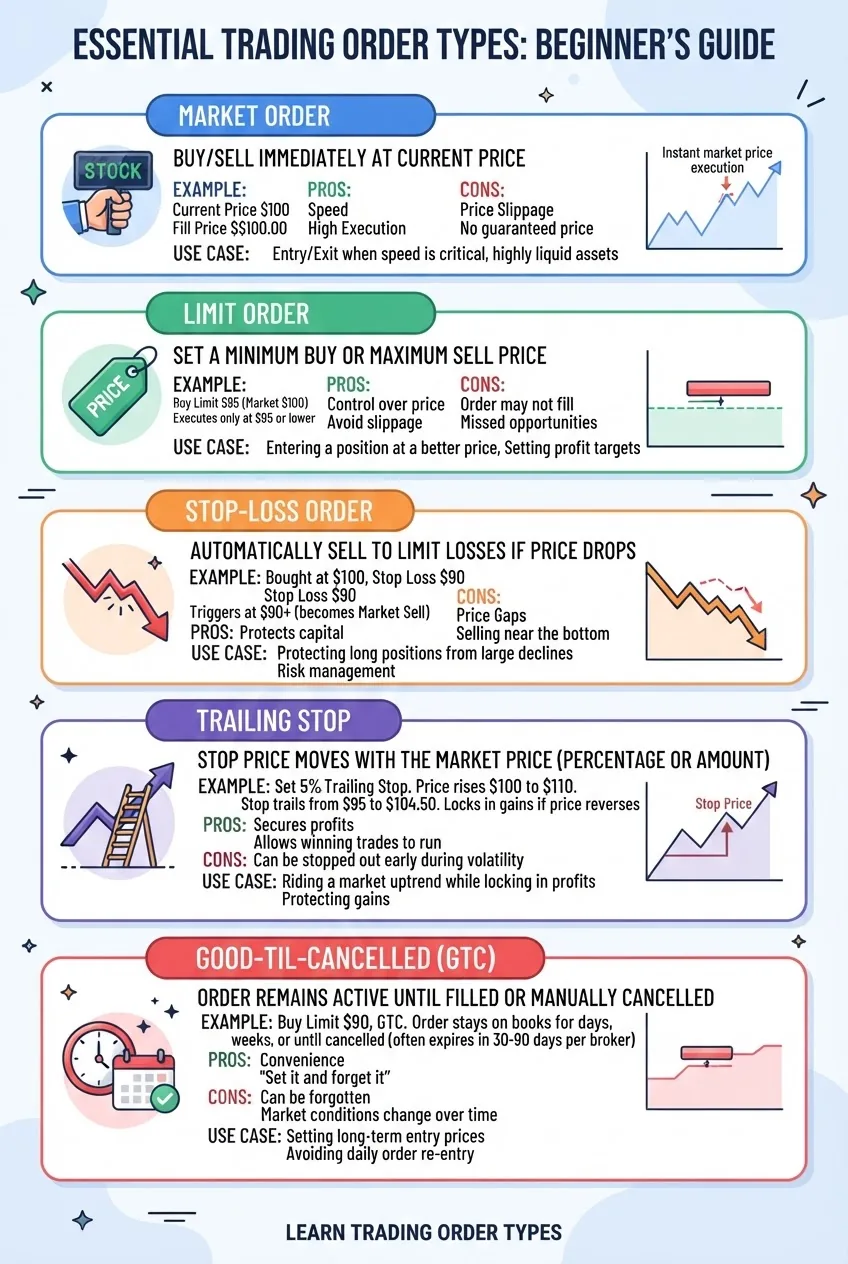
Define stop-loss rules if you will use them: for long-term buy-and-hold focus on position sizing instead of tight stop-losses. If you use stop-losses, use a 20% rule for individual stocks you expect will be volatile; use 8–12% trailing stops for short-term trades.
-
Research using structured templates:
Use a three-part research template for any stock or ETF: 1) Business and revenue drivers (write 3 sentences); 2) Valuation metrics (P/E, P/B, dividend yield, or ETF fee ratio) with current values; 3) Risks (3 named risks). Fill the template for every proposed purchase.
Concrete metrics: aim for ETFs with management expense ratios (MER) under 0.40% for domestic broad-market funds and under 0.20% for large global index funds. For individual stocks, note the trailing 12-month P/E; prefer P/E under 25 for mature companies in stable sectors, and expect P/E above 30 for growth tech names with higher volatility.
-
Build your first portfolio (detailed procedure)
Follow this step-by-step to assemble your first holdings. This step includes precise purchase sizes, order types and example tickers on ASX for Melbourne investors.
- Allocate funds using the 60/40 rule: If starting with AUD 5,000, target AUD 3,000 (60%) to core ETFs and AUD 2,000 (40%) to satellites (1–3 individual stocks). Example core ETF picks: an ASX 200 ETF (e.g., ticker XJO equivalent), and a global ex-Australia ETF (ticker example). Use at least two ETFs for geographic diversification.
- Choose satellites: Put AUD 1,000 each into up to two individual stocks or use AUD 500 each across four stocks to limit single-stock exposure. Pick names from different sectors — for example, one consumer staples company and one industrial or tech company.
- Calculate the number of shares to buy: Divide allocation by current market price and round down. Example: AUD 1,000 allocation to a stock trading at AUD 22 → buy floor(1000/22) = 45 shares costing AUD 990. Leave ~1–2% cash buffer for small fee variances.
- Select order types: Use ‘Market Order’ for ETFs with high liquidity and ‘Limit Order’ for individual stocks where price control matters. Set limit price at 1–2% above the current bid for small slippage tolerance during market open. For thinly traded names set limit within 3% of last traded price and be prepared to wait.
- Place trades and confirm: Review estimated brokerage and total cost on the review screen. Execute only after verifying ticker, trade size and that the “Order will settle T+2” note is present. Save confirmation emails and export a trade record to CSV for your records.
-
Record and organise your trades for tax and review:
Immediately after each purchase, add a line in your investing spreadsheet with: date, ticker, number of shares, price per share, total cost, brokerage fee, settlement date, and a one-line reason for purchase. Keep records for at least five years. For Australians, retain documents for Capital Gains Tax (CGT) calculations — brokers usually supply annual statements.
Concrete example row: 2026-08-03 | CBA | 20 | AUD 90.10 | AUD 1,802.00 | AUD 10 | Settlement 2026-08-05 | Dividend yield 4.2% and bank sector hold.
-
Set up dividend preferences and DRP if available:
If a company offers a Dividend Reinvestment Plan (DRP) and you want to grow holdings automatically, opt in via your broker or CHESS-sponsored registry. If you prefer cash, opt out. For most beginners with small portfolios I recommend cash dividends for the first 12 months to learn tax accounting; switch to DRP if you want automatic compounding.
Concrete threshold: enable DRP if you expect to hold the stock for 3+ years and your portfolio size is AUD 20,000+ to make re-invested amounts material. DRP often issues shares at or near ex-dividend price with no brokerage — check plan terms.
-
Set simple monitoring and rebalancing rules:
Define regular monitoring: price check and news scan monthly (15–30 minutes) and detailed review quarterly (30–60 minutes). Rebalance when any holding deviates more than 10 percentage points from its target allocation — for example, if ETF core rises from 60% to 71% of portfolio, sell a portion or add to satellites until the core falls back to target.
Example: Starting portfolio AUD 10,000 with 60% core (AUD 6,000). If core increases to AUD 7,100 (71%), sell AUD 1,100 or redirect the next new contributions to satellites until balance is restored. Keep sells minimal if capital gains tax could create costs you wish to avoid; instead use new contributions to rebalance where possible.
-
Understand taxes and record-keeping:
Australian investors: capital gains tax applies on disposal of shares; discount of 50% applies for assets held more than 12 months. Dividends are taxable; franking credits reduce tax payable. Keep purchase and sale dates and all dividend statements.
Concrete action: at year-end export your broker’s taxable events CSV and reconcile with your Australian tax return. If unsure about tax on specific instruments (e.g., CFDs, margin loans), consult an accountant. For simple buy-and-hold equities, expect to declare dividends and capital gains in the financial year they occur or are realised.
-
Manage costs: commissions, FX and spreads:
Track cumulative costs. If you pay AUD 15 per trade and make 24 trades a year, annual trading cost = 24 × 15 = AUD 360, which may be too high for small portfolios. Aim to keep trading costs under 0.5% of portfolio value per year for long-term investing.
Foreign stocks: when buying US equities, expect an FX conversion fee and a base commission. Example: to buy USD 1,000 of a US ETF, expect ~AUD 7–12 FX fee + AUD 10 brokerage. Consider using ETFs domiciled in Australia that hold global assets to avoid FX on smaller accounts.
-
Learn and practise order types on paper before trading live:
Simulate trades for two weeks with a paper-trading log: pick five tickers, decide entry price and stop-loss, then track daily for 14 calendar days. Record hypothetical outcomes and the reasoning for each move. This reduces emotional mistakes when using real money.
Concrete template: Date, Ticker, Entry Price, Position Size, Stop-loss Price, Rationale, Exit Price, Net P/L. After two weeks you should notice common biases (e.g., failing to use stop-loss, chasing winners).
-
Use diversification but avoid over-diversifying:
Diversify across at least 4–8 holdings if you have AUD 20,000 or more; with AUD 5,000–10,000, prioritise ETFs as core. Over-diversification (owning 40+ small individual holdings) creates ‘diworsification’—small positions cost time and offer little benefit.
Concrete rule: maintain at least 60% of value in diversified ETFs if your total capital is under AUD 20,000. Increase individual stock exposure only as your capital grows and you can keep each position above AUD 500–1,000 to keep brokerage costs sensible.
-
Consider automated regular investing (dollar-cost averaging):
Set up a recurring transfer (weekly/fortnightly/monthly) into your broker and use it to buy your core ETFs. For beginners, a monthly contribution of AUD 200–500 works well. DCA reduces timing risk and builds a habit.
Concrete setup: set AUD 250 monthly scheduled transfer. For ETFs with zero buy fee promotions, schedule on the day of month when the ETF trades with high volume; confirm the broker’s processing timeline to avoid missed orders.
-
Plan for dividends and income vs growth goals:
Decide if you want income (dividend-focused stocks or high-yield ETFs) or growth (low-dividend, higher-earnings growth stocks). If you need AUD 5,000/year in income from a portfolio, at a 4% dividend yield you’d need AUD 125,000 invested (5,000 / 0.04 = 125,000).
Concrete target: for retirement-income planning, model expected yields and tax treatment; don’t expect small beginner portfolios to produce meaningful income—focus on growth or reinvestment initially.
-
Protect your account and practice security:
Enable 2FA, use unique passwords per financial account, and monitor your email for trade confirmations nightly for the first week after new trades. Immediately report any unauthorised activity to your broker’s support line. Expect hold times up to 30 minutes on calls; use secure messaging if provided.
-
Review performance against a benchmark quarterly:
Compare your portfolio returns to a relevant index benchmark: ASX 200 for Australian-heavy portfolios, MSCI World (AUD) for global portfolios. If after 12 months your portfolio underperforms the chosen benchmark by more than 3 percentage points annualised, review stock selection and costs.
Concrete method: calculate portfolio return (including dividends) and benchmark return over the same period. If portfolio return = 6% and benchmark = 8% annualised, investigate fees, allocation drift and specific underperformers and act only if you have a clear reason.
-
Scale up thoughtfully as you learn:
Increase contributions by 10–20% every 6 months if your buffer and emergency fund remain intact. As portfolio grows, reduce per-trade percentage impact by increasing trade sizes or switching to brokers with lower per-trade costs or percentage-based pricing.
Concrete growth plan: if you start with AUD 5,000 and add AUD 250/month, you will have ~AUD 8,000 after 12 months (assuming no market returns). If you increase monthly to AUD 300 after 6 months, the compounding step-up accelerates growth without raising risk per trade.
-
Use watchlists and alerts rather than constant checking:
Set price alerts at 5–10% intervals for your holdings to avoid reacting to every intra-day move. For long-term holdings, set news alerts for “material events” or “earnings releases” rather than price-only alerts.
Concrete setup: alert at -15% and -30% for severe drops; alert at +25% and +50% for strong gains to consider partial trimming or rebalancing. Only act on alerts after confirming the underlying news and re-evaluating using your research template.
-
Understand corporate actions and share registry communications:
Companies will send notices for dividends, DRP elections, rights issues and buybacks. Respond within the stated timelines — usually 14–30 days. For a rights issue example, you may be offered new shares at a discount; calculate whether the cost and dilution fits your investment thesis.
-
Plan an exit strategy for each holding:
For every stock, define an exit trigger: a valuation target (e.g., P/E 30), a fundamental change (CEO departure + changed guidance), or a stop-loss. Record this with the buy note. This prevents holding through avoidable losses or clinging to losers.
-
Keep learning: read, follow credible sources and practise critical thinking:
Schedule 1–2 hours weekly for reading: company reports, broker research, and reputable news. Recommended reading cadence: 1 company report per stock per quarter, 1 market commentary per week, and 1 investing book every 2–3 months.
Concrete sources: the ASX site for market data and company announcements, broker research pages for company primers, and textbooks such as “The Little Book of Common Sense Investing” for passive strategy basics. For Australian regulation and investor protection consult the Australian Securities & Investments Commission at https://www.moneysmart.gov.au/ with rel attributes when linking externally.
Practical worked examples
Example A — Starting with AUD 2,500 (ETF-first)
Allocation plan: 80% core ETF, 20% satellite stock.
- Fund your account with AUD 2,500.
- Buy 1 unit of a broad ASX 200 ETF at AUD 1,200 (estimate) → place market order if spread small. Cost: AUD 1,200 + AUD 10 brokerage = AUD 1,210.
- Buy 1 unit of a global ex-Australia ETF at AUD 800 → cost: AUD 800 + AUD 10 = AUD 810.
- Reserve AUD 480 (approx) for satellite: buy one ASX share priced at AUD 40 → buy 10 shares costing AUD 400 + AUD 10 brokerage = AUD 410; remaining AUD 70 stays as buffer for FX or future buy.
Outcome: Core (2000) = 80%, Satellite (500) = 20% approximately. Transactional costs: AUD 30 total (3 trades × AUD 10), or 1.2% of the starting capital — acceptable for a first allocation.
Example B — Starting with AUD 10,000 (diversified mix)
Allocation plan: 60% ETFs (AUD 6,000), 40% individual stocks (AUD 4,000 across 4 names).
- Buy two ETFs: AUD 3,000 each into ASX 200 ETF and Global ETF. Each purchase may be split across a few trades depending on minimum parcel size and fractional share availability.
- Buy 4 stocks at AUD 1,000 each. If brokerage is AUD 12 per trade, each stock’s cost impact is 1.2% at purchase — within our <0.5% ongoing goal but acceptable as a one-time entry cost.
- Record and set stop-loss rules for each individual stock at 20% for volatile names and 12% for blue-chips.
Common mistakes and how to avoid them
From experience: I once chased a ‘hot tip’ and bought a small cap without checking liquidity — the spread and inability to exit for two weeks cost me 8% in opportunity. Now I always check average daily volume (minimum 50,000 shares for ASX small caps unless I accept illiquidity) and use limit orders for thin stocks.
- I ignored total fees early on. Avoid this by calculating projected annual fees: brokerage + account fees + ETF MERs. If your portfolio is AUD 5,000 and total annual fees exceed AUD 100, that’s >2% drag—too high. Aim for total fees under 1% for passive strategies.
- I didn’t set position sizes. I once allowed a single winning trade to become 30% of my portfolio; when it fell 40% I lost confidence. Use fixed percentage limits: 3–5% per stock at early stages, and review at thresholds.
- I failed to record reasons for purchase. Later I couldn’t explain why I owned several underperforming names. I now force myself to write a one-paragraph thesis for every purchase and a 3-point risk list; if the thesis can’t be defended in two minutes, I don’t buy.
- I reacted to daily price noise. After a big market drop I sold at the bottom because I was watching prices hourly. My fix: set scheduled reviews (monthly) and use alerts only for material events.
- I ignored tax consequences when rebalancing. A full portfolio rebalance created a large capital gain in a single year and pushed me into a higher tax bracket. Now I stagger sales and use new contributions to rebalance where possible.
Checklist — verify your work
- Broker account open and verified, 2FA enabled.
- Initial funding transferred and settled (T+1/T+2 confirmed).
- Investment plan documented: strategy, horizon, allocation percentages.
- Position sizing rules recorded (max % per stock, max sector exposure).
- Trades placed with correct tickers, sizes and brokerage costs confirmed.
- Records exported to spreadsheet: date, ticker, shares, price, fees, settlement date.
- Dividend preferences set (cash or DRP) as chosen.
- Alerts set for price moves and news for each holding.
- Quarterly review calendar entry and benchmark chosen for performance comparison.
When to call in a professional
Call a licensed financial adviser or accountant if any of these apply: you have AUD 200,000+ to invest and need a personalised allocation; you are planning an SMSF; you need tax optimisation for complex instruments or cross-border holdings; or you cannot reconcile tax statements and need help with capital gains calculations. For investment advice in Australia, use a licensed adviser authorised by ASIC—do not rely on unregulated tips from social media.
Additional resources and internal links
For related reading, see our core personal finance guide at Personal Finance Tips and Money Management Advice. To compare account types and brokerage options see Investment Accounts for Beginners. For more on investing basics and how investing works, read Investment Basics Guide.
Frequently Asked Questions
How do I begin investing in stocks with little money?
Start with low-cost broad-market ETFs and set up a monthly direct-debit of AUD 100–250 to your broker. This keeps transaction costs low and uses dollar-cost averaging. Once you reach AUD 2,000–5,000, consider adding individual stocks with position sizes of at least AUD 500 per holding.
What is the best way to start investing for beginners?
The best way is to open a taxable brokerage account, fund it with at least AUD 500–2,000, buy a broad-market ETF as your core holding and add 1–3 individual ‘satellite’ stocks later. Keep total trades under 24 per year to limit fees and review quarterly against a benchmark.
How do I buy my first stock and what order type should I use?
After funding your brokerage, search by ticker, choose the number of shares (allocation ÷ price), and select an order type: Market Order for liquid ETFs, Limit Order for individual stocks (set limit within 1–3% of current price). Confirm estimated fees and execute; settlements are usually T+2 days.
How can I invest in stocks and make money long-term?
Make money primarily through capital growth and dividends. Use a diversified core of ETFs and high-quality stocks, reinvest dividends or use DRP, control costs (aim for fees under 1% annually) and hold for at least five years to benefit from compounding and reduced tax on long-term gains.
How much should I allocate to individual stocks versus ETFs as a beginner?
Begin with 60–80% in ETFs and 20–40% in individual stocks. If your total capital is under AUD 10,000, lean toward 80–100% ETFs to keep trading costs low and diversification high. Increase stock allocation as your portfolio exceeds AUD 20,000 and you can size positions above AUD 500–1,000 each.