

What you’ll have achieved, time required and skill level
By the end of this guide you will have: a clear physical activity definition; measured your baseline fitness; a personalised, progressive 8-week exercise plan that meets Australian guidelines (150–300 minutes of moderate or 75–150 minutes of vigorous activity per week plus two strength sessions); and simple tracking tools to monitor intensity and volume. Realistic time commitment: 45–90 minutes to read, measure and plan on day one; then 30–90 minutes per week to record sessions plus 2–6 exercise sessions weekly (10–60 minutes each). Skill level assumed: complete beginner to intermediate — no specialist skills required.
Before you start
- Medical clearance if you are aged 65+, have cardiovascular disease, diabetes, recent surgery, or uncontrolled hypertension (bring blood pressure readings if available).
- Tools: a stopwatch or smartphone timer, step counter or phone health app, comfortable walking shoes, exercise mat, one light and one medium resistance band, a 1–3 kg hand weight or household substitute.
- Space: 2 × 2 m clear area for bodyweight and band exercises; safe 20–30 minute walking route or treadmill.
- Optional: heart-rate monitor or wristwatch capable of BPM for accurate intensity tracking.
- Notebook or simple spreadsheet to log date, duration, perceived exertion (RPE), and heart rate.
Step-by-step plan
-
Define physical activity clearly. Physical activity is any bodily movement produced by skeletal muscles that requires energy. Exercise is planned, structured, and repetitive physical activity done to improve or maintain fitness. For this guide, treat “exercise” as the planned subset and “physical activity” as the wider behaviour—walking the dog, gardening, active transport and gym sessions all count.
-
Assess your baseline fitness and health. Record weight, resting heart rate, and how long you can briskly walk or climb stairs without stopping. Take a 6-minute brisk walk on flat ground and note distance (metres) and average heart rate. Use 220 − age to estimate HRmax (safe approximation) and calculate moderate intensity as 50–70% HRmax, vigorous as 70–85% HRmax. Example: age 40 → HRmax 180 → moderate 90–126 bpm, vigorous 126–153 bpm. Log three trials across a week to reduce variability.
-
Set SMART goals. Write 2–3 specific, measurable goals with deadlines. Example goals: “Walk briskly 30 minutes, five days a week (total 150 min/week) for 8 weeks” and “Complete two 20-minute resistance-band strength sessions weekly, 2 sets × 10–12 reps per exercise.” Record target weekly minutes and strength sessions. Use the Australian guideline targets: 150–300 minutes of moderate or 75–150 minutes vigorous activity weekly, plus strength training on 2 non-consecutive days.
-
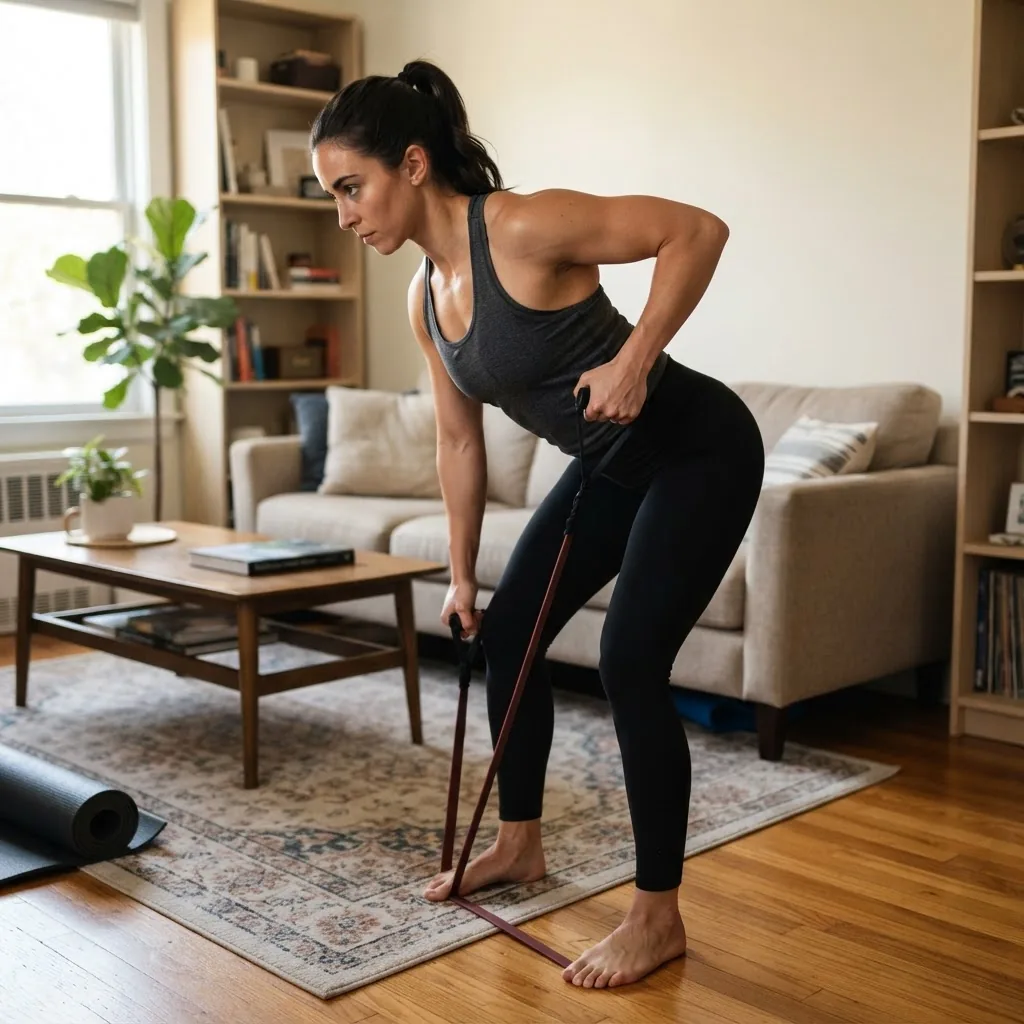
Choose your activities: balance aerobic, strength and flexibility. Select 3–5 activities you enjoy and can sustain: brisk walking (aerobic), cycling, resistance-band circuit (strength), bodyweight squats/lunges, and static stretching or yoga for flexibility. For beginners aim for:
- Aerobic: start with 20–30 minutes per session at moderate intensity (50–70% HRmax or RPE 12–14), 3–5 times weekly.
- Strength: 2 sessions/week, 6–8 exercises covering major muscle groups (legs, chest, back, shoulders, core), 2 sets × 8–12 reps, rest 60–90 seconds.
- Flexibility: 10–15 minutes after sessions, hold each stretch 20–30 seconds, 2–3 repetitions per muscle group.
-
Design a weekly schedule and log template. Use a simple weekly matrix: Mon–Sun rows and columns: Aerobic minutes, Strength (Y/N + exercises), RPE average, Peak HR. Example week for a beginner aiming 150 min moderate:
- Mon: 30 min brisk walk (moderate), RPE 13.
- Tue: Strength 20 min (2 sets × 10 reps: squats, rows, push-ups on knees, plank 20s).
- Wed: 30 min brisk walk.
- Thu: Rest or 15 min yoga (flexibility).
- Fri: 30 min cycle or brisk walk.
- Sat: Strength 20–25 min (same circuit + one heavier band).
- Sun: 25–30 min easy walk or active recovery gardening.
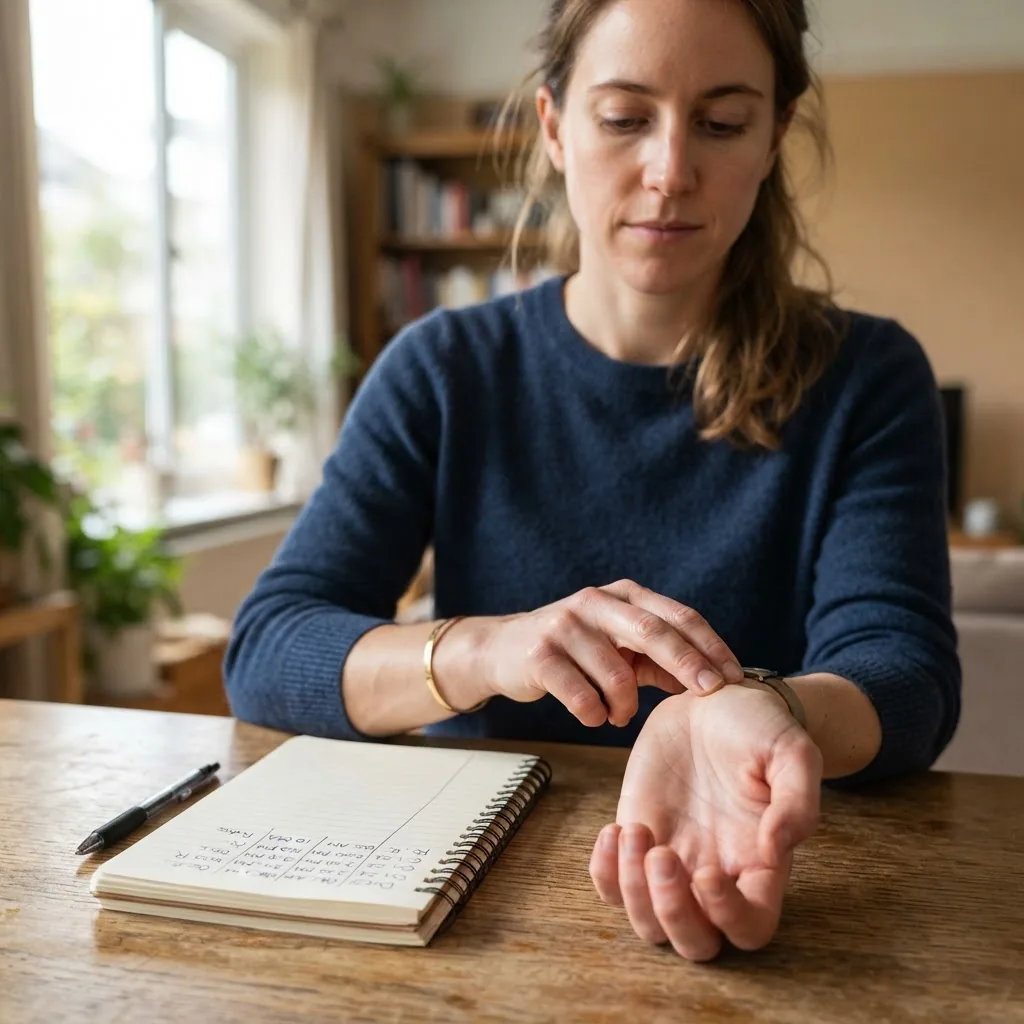
Record each session immediately: duration to nearest minute, mean RPE 6–20 scale, and heart rate if available.
-
Monitor intensity correctly (heart rate and RPE).
Use both heart rate and the Borg Rating of Perceived Exertion for redundancy. Calculate HRmax = 220 − age. Moderate = 50–70% HRmax; vigorous = 70–85% HRmax. If your HR monitor reads 110 bpm and your HRmax is 180, that is ~61% (moderate). RPE targets: moderate 12–14; vigorous 15–17. If you cannot talk comfortably during activity but can say a sentence, you are in moderate intensity; if you can only say a few words, it is vigorous. Re-check heart rate at the 10-minute mark of the session to confirm intensity.
-
Perform safe sessions: warm-up, main set, cool-down.
Structure each session:
- Warm-up 5–10 minutes: brisk walk or dynamic mobility (leg swings, arm circles).
- Main set: follow scheduled activity (e.g., 30 minutes brisk walk at moderate HR; or strength circuit 2 sets × 10 reps per exercise).
- Cool-down 5–10 minutes: easy walking, then 5 minutes static stretching (hamstrings, calves, chest, shoulders).
For strength: choose a resistance that makes the last 2 reps of each set challenging but possible with good form. Example loads: resistance band medium tension or 2–3 kg hand weight for beginners on upper-body moves.
-
Progress gradually using the 10% rule. Increase weekly volume (time or distance) by no more than 10% per week. When you can complete all sessions and RPE drops by 1–2 points for two consecutive weeks, increase either session duration by 5–10 minutes or add 1 extra strength set. For intensity increases, raise target HR by 5 bpm or advance RPE by 1–2 points, not both at once.
-
Track results and reassess at 4 and 8 weeks. At week 4 repeat the 6-minute walk or same baseline test and compare distance and average HR. Expect modest improvements: a 5–10% increase in distance or a 5–8 bpm lower heart rate at the same pace is realistic. At week 8 aim to meet or exceed your initial SMART targets (e.g., achieve 150 min/week moderate consistently and complete two strength sessions weekly).
-
Include recovery, sleep and nutrition basics. Schedule at least one full rest day per week and use light active recovery (20–30 minute easy walk) if sore. Aim for 7–9 hours sleep nightly and daily protein intake ~0.8–1.2 g/kg bodyweight to support muscle repair (for older adults or heavier training aim 1.2–1.6 g/kg). Hydrate: 250–350 mL water every 15–20 minutes during sessions longer than 60 minutes; otherwise drink 500–750 mL in the two hours before and 200–300 mL after short sessions.
-
Maintain motivation: schedule, social support and variety. Book sessions in your calendar, train with a friend once per week, and rotate activities each week (walk, cycle, band circuit) to avoid boredom. Reward compliance milestones: 4-week consistency (8 of 8 planned strength sessions) and 8-week completion (meeting weekly aerobic target for 6 of 8 weeks).
For more recreational activity ideas and motivation, see the full list of examples on our recreational activities guide and creative hobby options that pair well with physical routines.
Recreational Activities Examples Guide for Leisure and Wellness
Also useful: Creative Hobbies Guide and Hobbies for Seniors Guide.
Common mistakes and how to avoid them
I used to push straight into long runs and injured my knee after increasing mileage 30% in a single week; I now strictly use the 10% weekly rule and add extra strength work for hips. I learned that skipping strength training because “walking is enough” stalled my progress — two targeted strength sessions weekly fixed that.
- I ignored intensity and relied only on duration — result: low benefit. Fix: measure RPE and spot-check heart rate at 10 minutes into aerobic sessions.
- I skipped warm-ups to save time and felt sore—always include 5–10 minutes dynamic warm-up.
- I increased resistance by weight instead of improving technique — fix: first improve form for 1–2 weeks, then add load or reps.
- I stopped tracking after one week; consistency fell. Fix: use a simple weekly log and review every Sunday for adherence.
Checklist: verify your work
- You recorded baseline measures: weight, resting HR, and 6-minute walk distance.
- You set SMART goals with clear weekly targets (minutes and strength sessions).
- You have a weekly schedule that totals 150–300 min moderate or 75–150 min vigorous activity and two strength sessions.
- You know your HRmax calculation and target BPM ranges for moderate/vigorous intensity.
- You logged sessions consistently and applied the 10% rule to progress.
- You included warm-up and cool-down for every session and 1 rest day weekly.
When to call a professional
See your GP before starting if you have chest pain, uncontrolled blood pressure over 160/100 mmHg, diagnosed heart disease, recent stroke, insulin-dependent diabetes, or are pregnant with complications. Call a physiotherapist if you have persistent joint pain, previous major joint surgery, or recurrent muscle strains limiting movement; they will provide tailored exercise modifications and rehabilitation plans. If you want faster, sport-specific progress or high-intensity programming, engage an accredited exercise physiologist or personal trainer for a tailored program.
Frequently Asked Questions
What is physical activity vs what is exercise?
Physical activity is any body movement that burns energy (walking, gardening, cleaning). Exercise is planned, structured physical activity performed to improve or maintain fitness, like a scheduled brisk walk, cycling session, or resistance-band routine. Both contribute to health; exercise is the deliberate subset for training gains.
How much physical activity do I need weekly to get health benefits?
Adults should aim for 150–300 minutes of moderate-intensity activity or 75–150 minutes of vigorous-intensity activity weekly, plus strength training for major muscle groups on two non-consecutive days, to reduce disease risk and improve fitness.
How do I measure exercise intensity without a heart rate monitor?
Use the Talk Test and Borg RPE scale: moderate intensity lets you speak in sentences but not sing, RPE 12–14; vigorous intensity makes talking difficult, RPE 15–17. Also time short sprints or hills—effort should feel challenging for 20–30 seconds.
Can walking alone count as sufficient exercise for weight or health gains?
Yes—brisk walking can meet aerobic targets if done 150–300 minutes weekly at moderate intensity. For weight loss, pair it with resistance training twice weekly and modest dietary changes; longer or faster walking increases caloric burn.
How soon will I notice health benefits from regular physical activity?
Improved mood and sleep can appear within days; cardiovascular improvements (lower resting HR, longer brisk-walk distance) are often measurable at 4 weeks; meaningful strength gains and body composition shifts typically require 8–12 weeks with consistent training.