

Scars are areas of fibrous tissue that replace normal skin or other tissue after injury, surgery, burns or inflammatory diseases such as acne. They form as part of the body’s natural healing process when collagen is laid down to close and strengthen damaged tissue.
Definition of scar revision
Scar revision is a set of medical and surgical procedures designed to improve the appearance, texture, and function of a scar. Depending on the scar’s type and location, revision can reduce visibility, relieve discomfort or tightness, restore movement when scar tissue limits mobility, and correct deformities caused by injury or prior surgery. For a clinical overview of surgical approaches, see this resource on scar revision surgery.
Importance of scar revision
Scar revision can restore the skin’s appearance and function, improve comfort, and enhance self-confidence—especially for people with large or highly visible scars. In cases where scars cause pain, itching, or restricted movement, revision may also relieve those symptoms and improve quality of life.
Understanding scars
Different types of scars
Scars vary widely in appearance and behavior. Common types include hypertrophic scars (raised but confined to the original wound), keloid scars (overgrown tissue extending beyond the injury margin), atrophic scars (depressed or sunken areas, often from acne), and contracture scars (tightened skin from deep burns that may restrict movement).
Keloid scars
Keloids are raised, often irregularly shaped scars that result from excessive collagen production during healing and can extend beyond the original wound. They may be itchy or painful and sometimes recur after treatment. For more information on keloids and treatment options, see the NHS overview on keloid scars.
Hypertrophic scars
Hypertrophic scars are raised scars that stay within the boundaries of the original injury. They result from an exaggerated healing response but often improve gradually over time. Treatments such as silicone sheets, steroid injections, or laser therapy can accelerate improvement.
Contracture scars
Contracture scars develop when injury penetrates deeply, such as with burns. They cause the skin to tighten and can limit movement by affecting underlying muscles, tendons, or nerves. Surgical release and reconstructive techniques are commonly used to restore function.
Acne scars
Acne scars are long-lasting changes in skin texture caused by inflammation of the hair follicles and surrounding tissue. They can be atrophic (depressed) or hypertrophic (raised). Numerous treatment options exist, including microneedling, laser resurfacing, chemical peels, and fillers. The American Academy of Dermatology provides patient-focused information on acne scar treatments.
Causes of scarring
Scarring follows any process that injures the skin or deeper tissues: cuts, surgical incisions, burns, infections, or chronic skin conditions. The body responds by producing collagen to bridge the damaged area; the amount, orientation, and duration of collagen production determine the scar’s final appearance.
How scars affect skin health
Beyond cosmetic concerns, scars can alter skin function and elasticity. They may cause tightness, reduced range of motion, pain, sensitivity, or persistent itching. Scars can also have psychological effects—leading to self-consciousness or lowered self-esteem—so holistic care often addresses both physical and emotional aspects.
The process of scar revision
Initial consultation and medical history
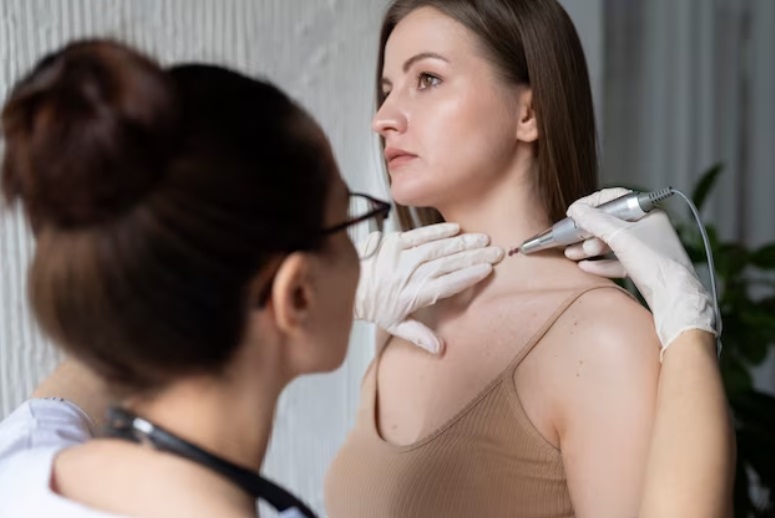
The initial consultation is vital. Your clinician will review your medical history, including the cause and age of the scar, prior treatments, allergies, medications, and any factors that affect healing (for example, smoking, diabetes, or a tendency to form keloids). This information helps determine realistic goals and the safest, most effective treatment plan.
Explaining the procedure and setting expectations
A clear explanation of the proposed treatment, expected outcomes, recovery timeline, and possible need for staged or combined therapies is important. Scar revision often improves appearance rather than completely erasing a scar; realistic expectations help patients make informed decisions.
Risks and complications
Every intervention carries potential risks—infection, bleeding, pigment changes, recurrence (particularly with keloids), and the possibility that the revised scar may be more noticeable. These risks should be discussed before treatment so you can weigh benefits against potential complications.
Techniques in scar revision
Treatment is tailored to scar type, location, and patient goals. Common approaches include:
- Surgical revision — excision, geometric broken-line closure, Z- or W-plasty to reorient and reduce tension, or grafting for large defects.
- Laser and light therapies — fractional lasers, pulsed-dye lasers, and other devices to reduce redness, flatten raised scars, and improve texture.
- Resurfacing and abrasion — dermabrasion and chemical peels to smooth surface irregularities, especially for acne scars.
- Injectable treatments — steroid injections for hypertrophic scars and keloids; dermal fillers to raise depressed scars; or collagen-stimulating injections such as PRP or certain biostimulatory agents.
- Topical treatments and silicone therapy — silicone sheets or gels, scar-reducing creams, and other topical agents that can soften and flatten some scars over time.
- Pressure therapy and massage — commonly used for burn scars to reduce hypertrophy and improve pliability.
Topical treatments
Topical options—silicone gel or sheets, corticosteroid creams in select cases, and certain prescription formulations—can help flatten and fade scars when used consistently. Sun protection is essential during healing because UV exposure can darken scars and make them more noticeable.
Injectable treatments
Injectables play multiple roles: corticosteroid injections reduce inflammation and flatten hypertrophic scars and keloids; soft-tissue fillers can elevate depressed scars for immediate cosmetic improvement; and biologic or regenerative injections (for example, platelet-rich plasma) may improve texture and promote remodeling in some patients.
Surface and resurfacing treatments
Surface treatments target the outer skin layers to improve texture and pigmentation. Options include microdermabrasion, dermabrasion, chemical peels, and ablative or non-ablative laser resurfacing. These procedures are especially useful for acne scars and superficial irregularities.
Surgical revision
Surgical scar revision is chosen when changing the scar’s shape, orientation, or depth will produce a better outcome—often combined with other modalities (e.g., lasers or steroid injections) for optimal results. Complex or functional problems, such as contractures, may require reconstructive techniques and rehabilitation.
Factors influencing choice of technique
Choosing a technique depends on scar type, size, location, skin type, age, overall health, prior treatments, likelihood of recurrence (especially for keloids), and the patient’s cosmetic goals. Clinician experience and the availability of multidisciplinary care (surgery plus dermatologic or physical therapy support) also guide decision-making.
Post-scar revision care
Understanding the recovery process
Recovery varies with the procedure and individual healing. Improvements often continue for months as collagen remodels. Emotional responses to changes in appearance are normal; realistic expectations, patience, and support from your care team help with recovery.
Post-surgery care requirements
Typical aftercare includes wound care instructions, avoidance of strenuous activity that stresses the repair, prescribed medications (for pain or to reduce inflammation), and measures to minimize scar formation such as silicone therapy, massage, and sun protection. Smoking cessation and good glycemic control (for those with diabetes) improve healing outcomes.
Follow-up visits and long-term monitoring
Follow-up appointments are essential to monitor healing, remove sutures when appropriate, administer injections (for example, steroids), and detect complications early. Some conditions—like keloids—require longer-term follow-up because of higher recurrence risk.
For more detailed, patient-friendly information about scar assessment and treatment options, trusted resources include the American Academy of Dermatology and specialized surgical centers. Discuss options with a qualified dermatologist or plastic surgeon to develop a personalized plan.

